
Operators You Actually Use
Swift’s operator set is broad, but a small set covers 95% of what you write daily. This guide focuses on the operators...
A personal blog by Deya Elkhawaldeh
Insights, ideas, and practical guides on
Swift, iOS development, and the Apple ecosystem.
Swift’s operator set is broad, but a small set covers 95% of what you write daily. This guide focuses on the operators...
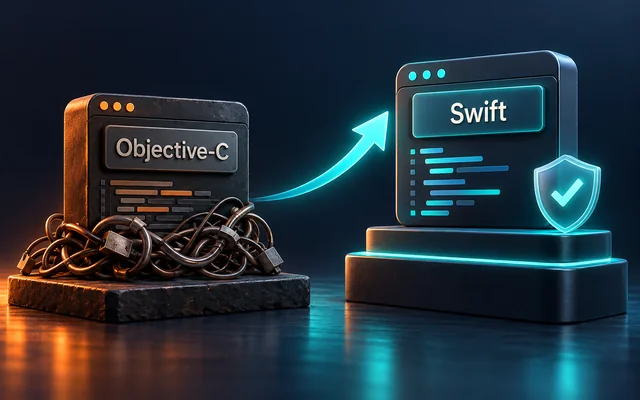
Objective-C, developed in the early 1980s, has long been the backbone of iOS and macOS development. Its deep integration with Apple’s ecosystem...
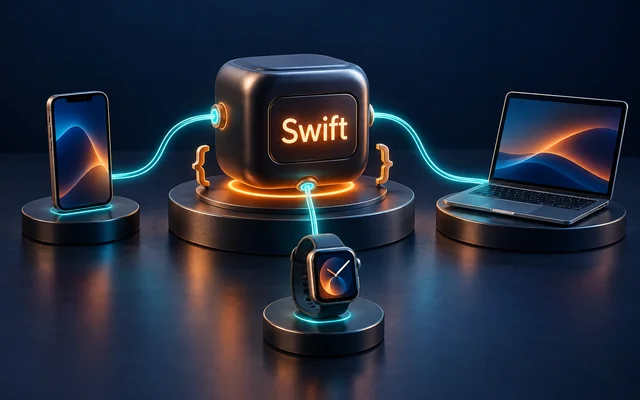
Swift is Apple’s modern, open-source programming language, introduced at Apple’s 2014 Worldwide Developers Conference (WWDC). Designed to be the successor to Objective-C,...

Swift has no C-style for (int i = 0; i < 10; i += 2) loop. Ranges like 0..<10 cover steps of...

Some closures run and are gone before the function that received them returns. Others are saved for later: stored in a property,...

defer schedules a block of code to run when the current scope exits, no matter how it exits: a normal return, an...

Method swizzling swaps the implementation behind a method at runtime, so calling one method actually runs different code. It’s an Objective-C runtime...

Operators are just functions with special syntax. Beyond the everyday +, -, and ==, Swift has overflow operators, masking shifts, and a...